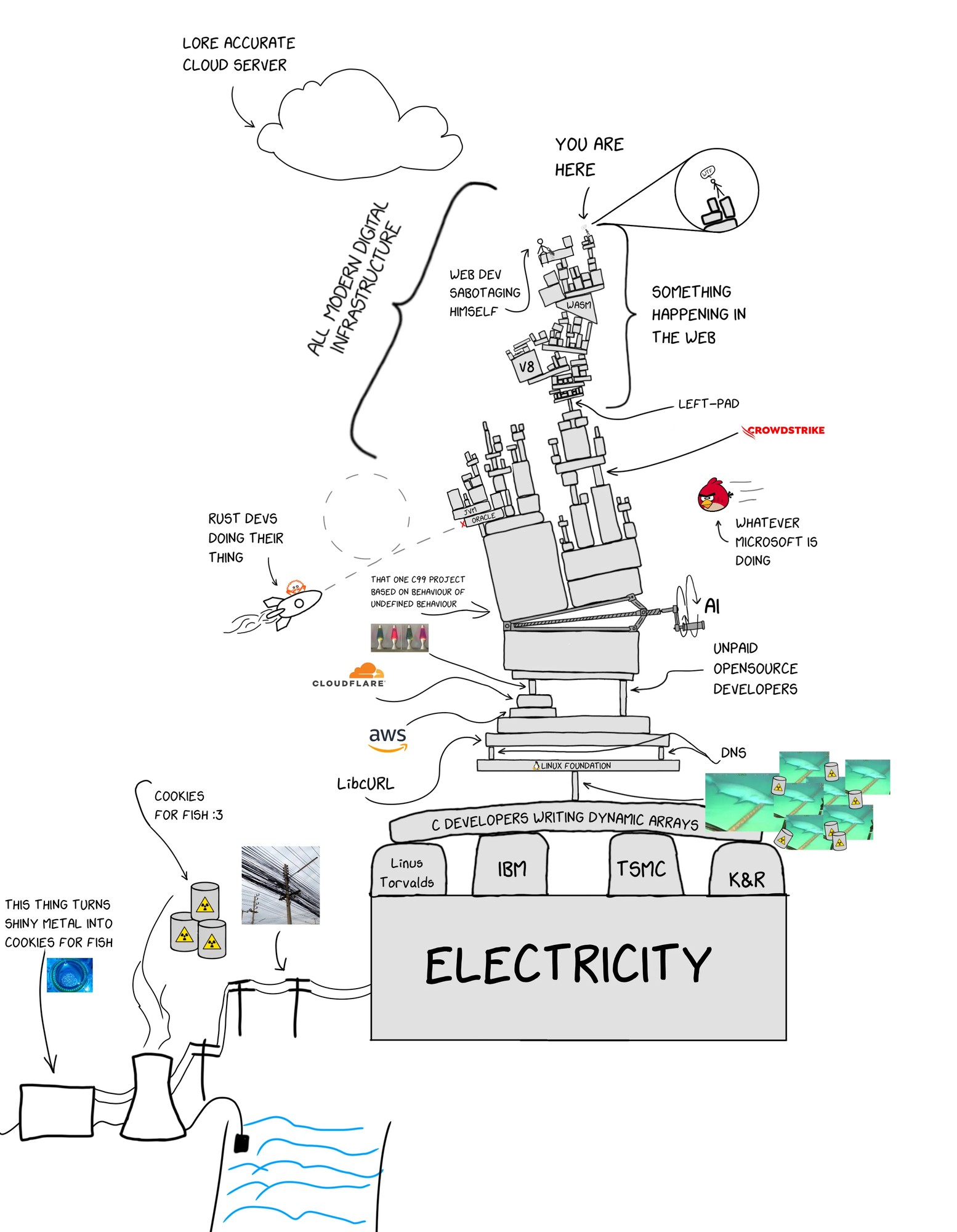

It’s missing a Saddam Hussein hideout
Don’t forget the cutest single point of failure!!

Not to spread concern or anything, but the electrical grid is managed and controlled by software. And that software may or may not be very reliant on AWS. I’m probably not allowed to say more than that.
Power company engineer here, it’s true that a lot of our supporting and analytics software went down during the AWS event.
However, most devices that actually control grid units (called bulk electric system cyber-assets) are air-gapped or utilize a data diode.
FERC Reliability Standards and NERC CIP
However-er, flipping through those standards just now, turns out it’s 100% permitted to connect your “bulk electric system cyber-asset” to a cloud integration if done compliantly.
In all seriousness though, the core of the technical stack has become very robust in my opinion (DNS being the exception). From a hobbyist’s perspective, things work much better than when the Web was still young. I can run multiple sites (some of them being what are today called apps) on a domain with subdomains, everything fast, HTTP3-capable, secured via valid free TLS certs, reverse proxied, all of that running on a system deployed in minutes…
If you focus on the part of the Internet that you have control over, it’s a lot better than back in the simple days.