
A frog who wants the objective truth about anything and everything.
Admin of SLRPNK.net
XMPP: prodigalfrog@slrpnk.net
Alt lemmy account: Cafefrog@lemmy.cafe
- 25 Posts
- 67 Comments


 2·9 days ago
There’s at least Mageia still carrying the Mandrake/Mandriva torch without that baggage :)
I recently learned that OpenMandriva’s president (warning, lunduke link as evidence) has declared the project “non-woke” and “anti-DEI”, which has resulted in it attracting a hard right community. IMO, a good reason to avoid it.
 7·14 days ago
It’s Mint’s built-in version of redshift, it reduces blue light at night by tinting your screen orange to be easier on the eyes. It is installed by default on all cinnamon versions of Mint. It is not included with Xfce (not sure about MATE).
If you want something similar on Xfce, you’d have to install Redshift and manually configure it with either a schedule or a location for it to work automatically, as it has been abandoned and the automatic location finder is broken.
OpenMandriva is now a hard right distro. Mageia is the better option for those who want a successor to Mandrake/Mandriva, though Mageia is struggling to retain an active community and maintainers, I believe.
I recently learned that OpenMandriva’s president (warning, lunduke link as evidence) has declared the project “non-woke” and “anti-DEI”, which has resulted in it attracting a hard right community.
I recently learned that OpenMandriva’s president (warning, lunduke link as evidence) has declared the project “non-woke” and “anti-DEI”, which has resulted in it attracting a hard right community.
So uh… Can’t say I feel too bad for 'em having this unique issue.
Xlibre is an explicitly right-wing projevf developed by alt-right developers. They have been rejected by other distros as well on those grounds in favor of Wayback, a non-right wing alternative.
…
Embarrassed to say I completely spaced that 26.04 is actually released (and the article even says it’s based on that too, d’oh). Completely invalidates what I’d said above.
Thanks for pointing that out 😅
I believe the version of KDE used in Kubuntu 24.04 is still 5.27, while this distro uses KDE 6.6, which I assume is added from a PPA.Oopsie!Per the Drauger page:
like it’s namesake, it requires maintainance from time to time, and issues cropping up are not uncommon. Drauger OS is developed by a small, passionate team who don’t get paid anything for their work. Therefore, users who are new to Linux may want to look elsewhere to gain experience before taking the plunge with Drauger OS.
This being said, any sufficiantly advanced user can easily use Drauger OS to do anything from streaming, video editing, and audio production to everyday usage. However, you may encounter issues in the process due to the gaming-related optimizations.
So I’m inclined to believe it is less stable than a normal LTS Ubuntu or any other LTS flavor,
as that combination of old and the new added from their backports repo/PPA has not been as tested compared to the standard distros.EDIT: I’m an idiot and forgot 26.04 is the current LTS.
It’s essentially a hobby project from people with a fairly high chance of abandoning it at some point. There’s nothing wrong with that, it’s just not a distro that would be good for an average user, it’s only intended for an experienced enthusiast, as they mention on their project website.
Though I’m not sure how much overlap there is of experienced enthusiasts who are specifically interested in an experimental LTS distro that has a high chance of breakages, as that defeats the purpose of LTS. As I say, it just seems to make more sense to go with Arch or Fedora at that point, which would probably be more stable in comparison.
Not sure why someone would want those old LTS packages with a more up-to-date DE if the stability of using an LTS is mostly lost.
One thing worth pointing out is the storage requirement. Drauger OS lists 32 GB as the minimum, with roughly half used after installation. That feels heavy for a niche gaming distro, especially when many users may only want to test it in a virtual machine or on spare hardware.
Now, the important caveat: Drauger OS still feels like a niche project rather than a distribution with a strong, proven release track record. It has been around for several years, and the developers clearly understand the problem of gaming-focused Linux distros disappearing over time.
That is a fair point, but it does not make Drauger OS a mature or battle-tested choice. The release cadence appears slow and irregular, and the project warns users it is not meant for everyday desktop use.
That’s a shame. I think there could be a case for an Ubuntu distro with a more up-to-date version of KDE, as from what I’ve heard Kubuntu’s quality has kinda gone downhill (and includes Snaps) and KDE Neon is more of an unstable development platform.
However in the meantime, I think KDE enthusiasts are better off just going with Fedora, an Arch based distro instead, or even Debian Testing instead.
True, though I believe the Packman repo is still needed for access to patent encumbered codecs, so it’s hard to avoid. It also used to be needed for Nvidia drivers and Steam (and the Flatpak steam is usually not recommended, can have issues over the standard package), though I’m unsure if that’s still the case.
From what I recall, that way isn’t recommended on Tumbleweed/Slowroll. Looking it up now, the openSUSE website still appears to recommend using either the terminal or Myrlyn.
For openSUSE Tumbleweed, zypper dup and Myrlyn is the only recommended way to update the system. Other tools like Plasma Discover or Gnome Software cannot resolve package conflicts which may arise by using external repositories.
I assume Packman would be considered an external repository, which I suspect most people will want to use.
However I wasn’t familiar with Myrlyn until now. It looks a bit like Synaptic (which could be intimidating to newbies due to how old/enterpise-y it looks), but at least there is now a recommended GUI way to do updates.
Do you happen to know if Tumbleweed/Slowroll now mention in a welcome screen anywhere to use those update methods instead? From my time with it there wasn’t any good new user info presented, ya kinda had to dig to find out that sorta stuff.
I’m personally a bit hesitant to recommend Slowroll (despite really liking the idea of it), since it’s still considered experimental by openSUSE, and I personally had some issues with it borking the Nvidia driver from an update.
OpenSUSE also comes with some… odd design choices, like the package patterns that can trip people up when they uninstall things, and the lack of a GUI updater for tumbleweed/slowroll (unless that’s changed?).
Saving that link, looks super handy. Thanks for sharing it!
I thought perhaps Ubuntu’s LTS point releases might update it, but after checking, it appears they do not. Kubuntu seems to suggest that they use PPA’s for users who want a newer KDE on an LTS, though I’m unsure how stable that method would be in practice.
Overall it does seem that LTS distros tend not to bother updating KDE, unlike Gnome (which Ubuntu does seem to update in their point releases).
Some KDE devs have spoken about someday making LTS versions of KDE that line-up with major LTS distros release schedules (KDE once had an LTS release but dropped it since none of the distros used it for it being out of sync with their schedules, IIRC), but I haven’t heard any news on that front.
Only downside is Debian 13 will likely forever be stuck with KDE 6.3.6, which has some noticeable bugs on my hardware that won’t be fixed until Debian 14.
KDE really benefits from distros that keep it more up to date, to the point where even the KDE devs suggest avoiding KDE on Debian.
Thanks for that! I was able to find a page that details what it checks for:
https://www.seafoam-labs.org/shelly-alpm/docs/security/
Seems like it’s certainly better than nothing, but I’m unsure if the 1500 infected packages in the AUR would’ve been flagged by this, depending on how the malware was introduced. Even with Shelly, I probably wouldn’t recommend most people use the AUR until more protections are put in place by the Arch team.
Ah, what’s just my own thoughts I put in the post body.


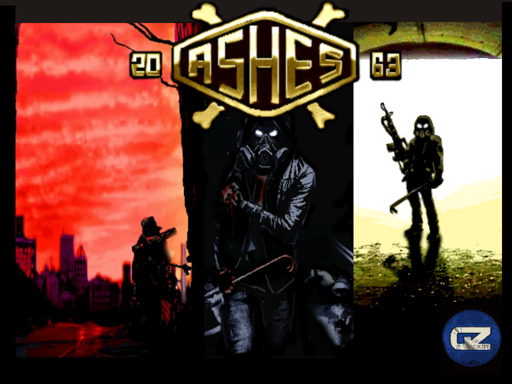

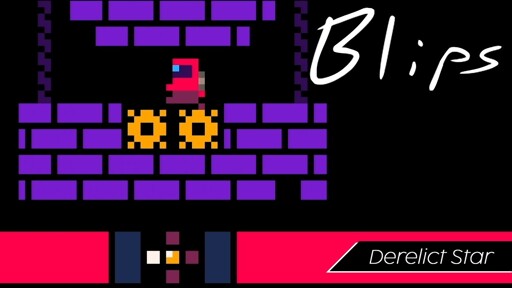






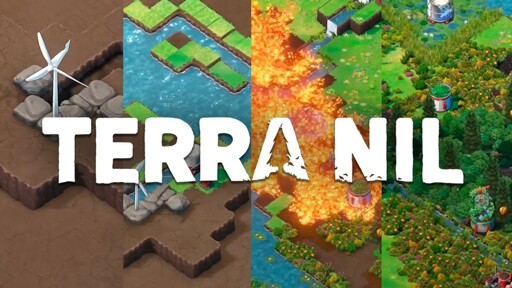

I felt the same way about the dialog when I tried the demo. I love the art style, but the dialog was just a bit too out of place for me.
However, the author mentioned in a reddit thread I found that his skills improved quite a bit over the 12 years he spent making it, though ultimately decided not to re-do the art and dialog from the start of the game as it would’ve taken too long, so I’m guessing it might start feeling less out of place as the game progresses? That’s definitely not ideal though, as first impressions count for a lot :\